By Danny Crownover
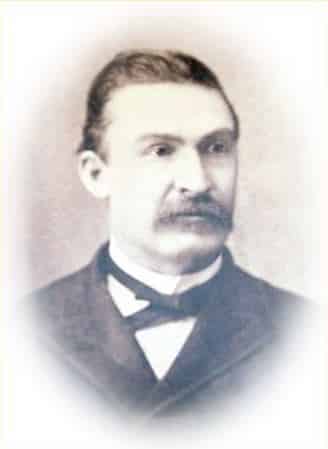
When James A. Bilbro, a distinguished Gadsden lawyer, became judge of the Ninth Judicial Circuit in 1898, he gained national attention on the first day he held court by opening the session with prayer.
Each morning, he invited a local or visiting preacher to offer a prayer. According to historical accounts, this was the first time a judge in America had done so.
He followed that policy in all the counties of his circuit, and there was always a religious air about his courtroom.
Whenever he was required to pronounce a sentence following a jury’s verdict, he invariably reminded the defendant of the solace and comfort to be found in a Christian life.
That practice was unique in those days. Those who lived here then knew Bilbro as a familiar figure in the city for many years.
Although he was not a pioneer, he played an important role in the development of his adopted city after having established himself as a leading lawyer in South Alabama early in life.
Both Judge Bilbro and his wife, Francina Mason Bilbro, were descended from old Virginia families.
His father’s ancestors were prominent politicians and businessmen in Peterboro, Virginia. His mother, Ann Rutledge, was descended from the Rutledge family of Charleston, South Carolina.
She was a highly educated woman and an accomplished musician. Her father, Judge Wylie Wellington Mason, who was prominent in Tuskegee and Montgomery, was descended from George Mason of Gunston Hall, Virginia, who played a prominent role in the early colonial history of the state.
Gunston Hall is preserved as a historic home associated with George Mason.
Judge Bilbro’s sister, Mrs. Ida Bilbro Cassels, widow of the late Thomas Cassels, a leading Gadsden merchant and miller for many years, taught in local public schools before her marriage. She operated a private school offering tutoring to students of various ages.
One daughter, Mathilde Bilbro, was widely known as a composer of music, much of it written for textbooks. She had been interested in music since early childhood. She pursued piano and concert work before turning to music composition and teaching piano and harmony.
Thirteen of the nation’s largest music publishers, based in Boston, New York, Philadelphia, Cincinnati, Chicago and Dayton, published her works, which were known nationally.
She also taught a large class in piano and harmony and had a reputation as one of the best teachers in the country.
Judge Bilbro was in a class by himself as a lawyer. He was active in the Methodist Church and deeply religious. He believed that divine guidance was always needed in the legal work of a judge or jury.
He was a 32nd-degree Mason and would soon have been elevated to the 33rd-degree had death not intervened. He served as grand master of the Grand Lodge of Masons and as grand master of the Grand Lodge of Odd Fellows.