By Tabitha Bozeman
“True communities would require not egalitarianism and tolerance but knowledge, an understanding of the necessity of local differences and respect. Respect, I think, always implies imagination – the ability to see one another, across our inevitable differences, as living souls.” Wendell Berry
This week, a good friend brought up the concept of the “third space,” something we have discussed in the past, asking if I still feel like I have one. I thought for a moment and realized I do have a few third spaces, spaces that are comforting and comfortable, and allow me to enjoy our community. Everyone’s ideal third space will look a little different, but these spaces allow us to see others–and ourselves–as the living, breathing souls we are, each of us just trying to make it through life, find joy and happiness, and experience peace on our journeys.
“Third Spaces” are places that are neither home nor work, where people can gather informally, have conversation, and not worry about entry cost. A third space can be depended upon to be consistently available. These spaces might be outdoor, or a local coffee shop. Someone’s third space might be the lobby of their school, or a friend’s front porch. Someone else’s might be their church kitchen, or a favorite bookstore. Wherever the space is, though, it is a place that is non-performative and allows those gathered to feel at ease and that they can be themselves. In short, third spaces are interwoven and overlapping places that create our communities.
The Cambridge English Dictionary defines “community” as “the people living in one particular area, or people who are considered as a unit because of their common interests, social group, or nationality.” Wendell Berry focuses on a more specific aspect of community: “I believe that the community – in the fullest sense: a place and all its creatures – is the smallest unit of health.” He goes on to further this connection between community and health, pointing out that individuals need community to be fully healthy.
With the advent of social media, third spaces moved online for many people, shifting our perceptions of what constitutes community. However, science has shown over and over again that virtual interactions do not affect our brains and reward mechanisms in the same ways that in-person, face-to-face interactions do. So, although they are good places to keep track of photo memories, check on friends and family who live far away, or post reminders for local events, and even connect with like-minded others, online social spaces do not provide the same generative ease or emotional and physiological rewards that physical spaces and interactions can foster. In “A Man Without a Country”, Kurt Vonnegut put it this way: “Electronic communities build nothing. You wind up with nothing. We are dancing animals. . . How beautiful it is to get up and go out and do something.”
Sometimes, though, we don’t feel like “doing something,” much less interacting with other people. Life can be hard and exhausting, and when it is the last thing we may want to do is expend more energy connecting with others. This is where third spaces can really provide a boost for mental and emotional health. If someone has a space they know they can depend on, drop by, show up, and just let themselves exist in, much of the stress of creating and engaging in social connection is lessened. The space is familiar, and the expectations are low. If others happen to also be there, a nod, smile, or word of greeting can be enough to spark the reminder of how good it feels–and how good it is for us–to actively be present in our communities. Social connection can improve mood, boost mental health, and even protect against chronic illnesses like dementia, heart disease and stroke.
Memoirist Bill Clegg, who chronicled his descent into and recovery from a crack cocaine addiction, mused “Rough as life can be, I know in my bones we are supposed to stick around and play our part. . . And it might be you never know the part you played, what it meant to someone to watch you make your way each day. Maybe someone or something is watching us all make our way. I don’t think we get to know why. It is, as Ben would say about most of what I used to worry about, none of my business.”
Don’t wait until the rough times to find and enjoy a third space in our community. Show up at a local bookstore or coffee shop regularly. Grab a corner booth by yourself or with a friend at a favorite restaurant on the same day each week or month. Sit on a bench at the park and read a book each Saturday. Visit the falls and feed the ducks, meander around the park once a month, or visit the public library and chat with the librarians and other patrons. Wherever you choose to go, make that space as familiar to you as your own home. You have agency and there are more than enough options in our beautiful community. Pick a couple and make those your drop-in, no-expectations, come as you are third spaces. Then, when the rough days inevitably drift across the calendar, you will have a space to give your body and soul a break, take solace in connection, and feel the benefits of belonging in our community.
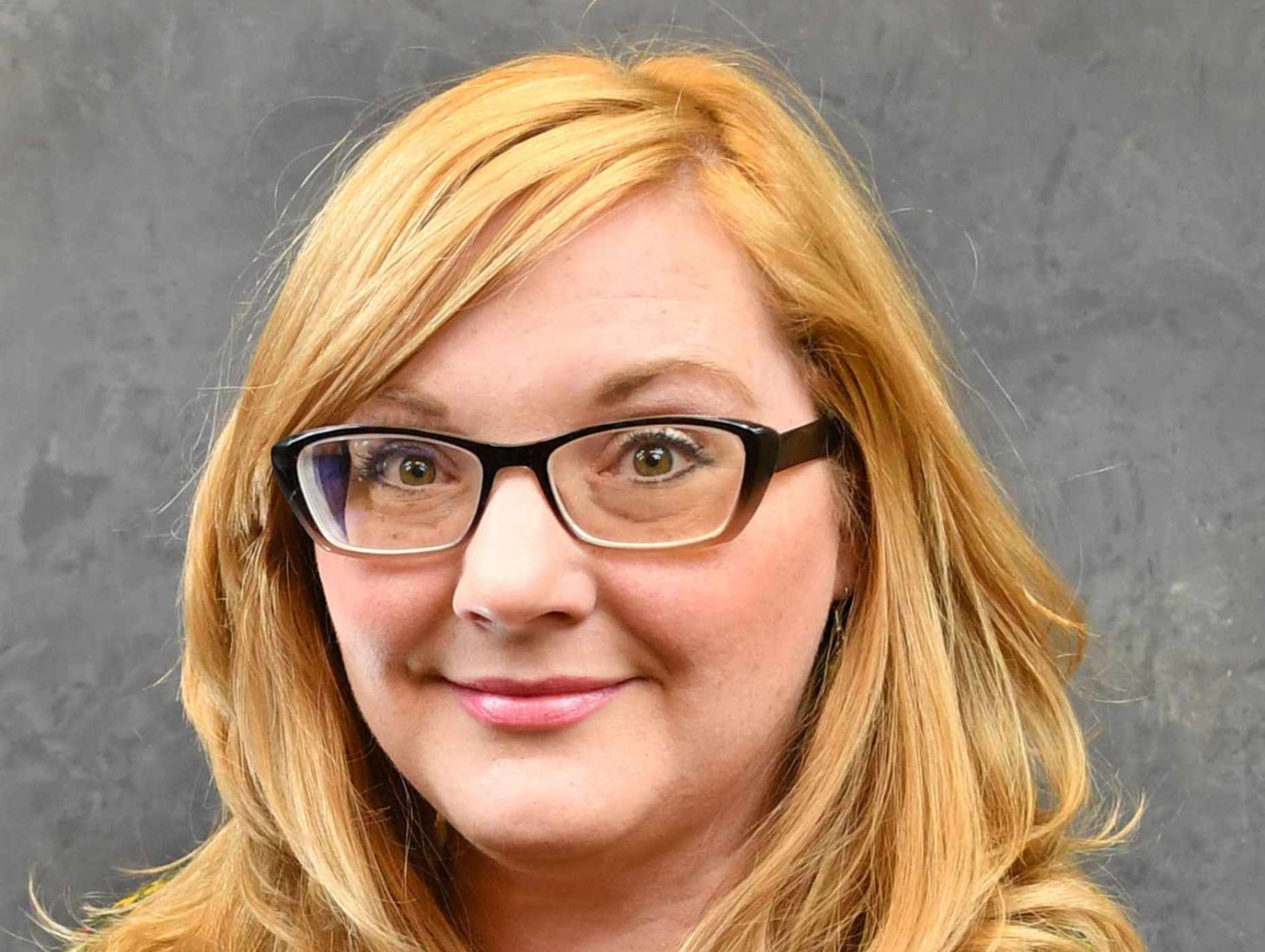
Tabitha Bozeman is an instructor at GSCC. Email at tabithabozeman@gmail.com.