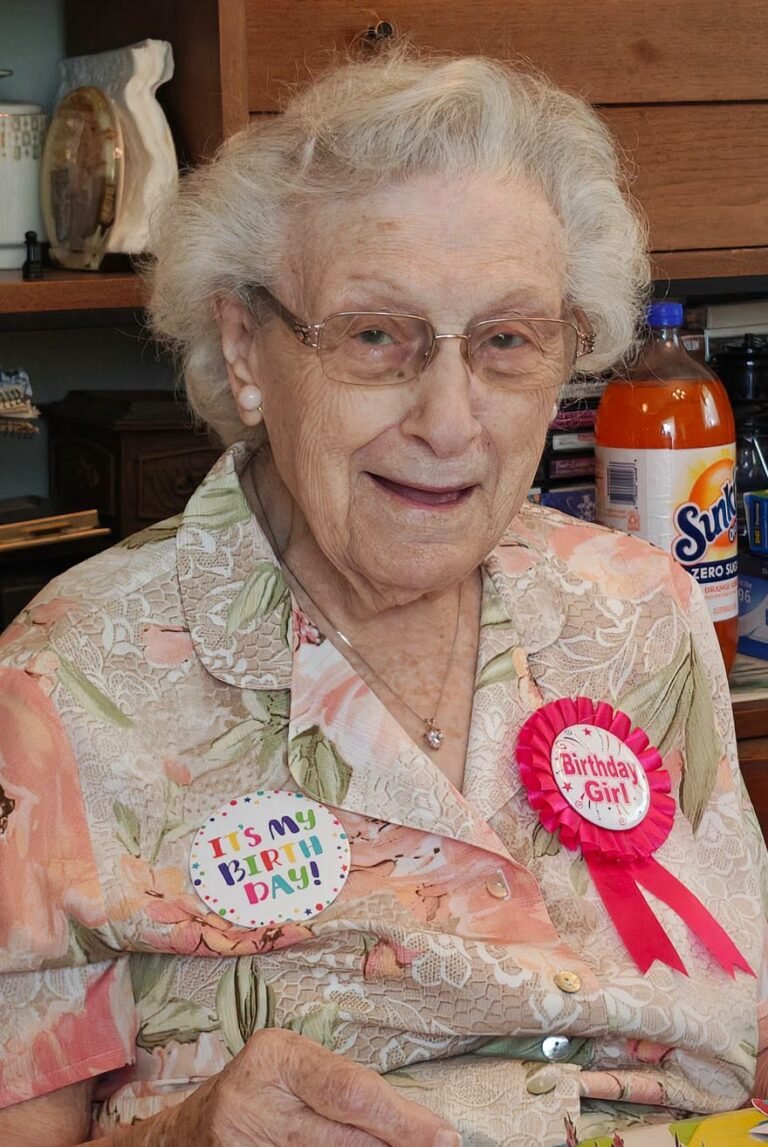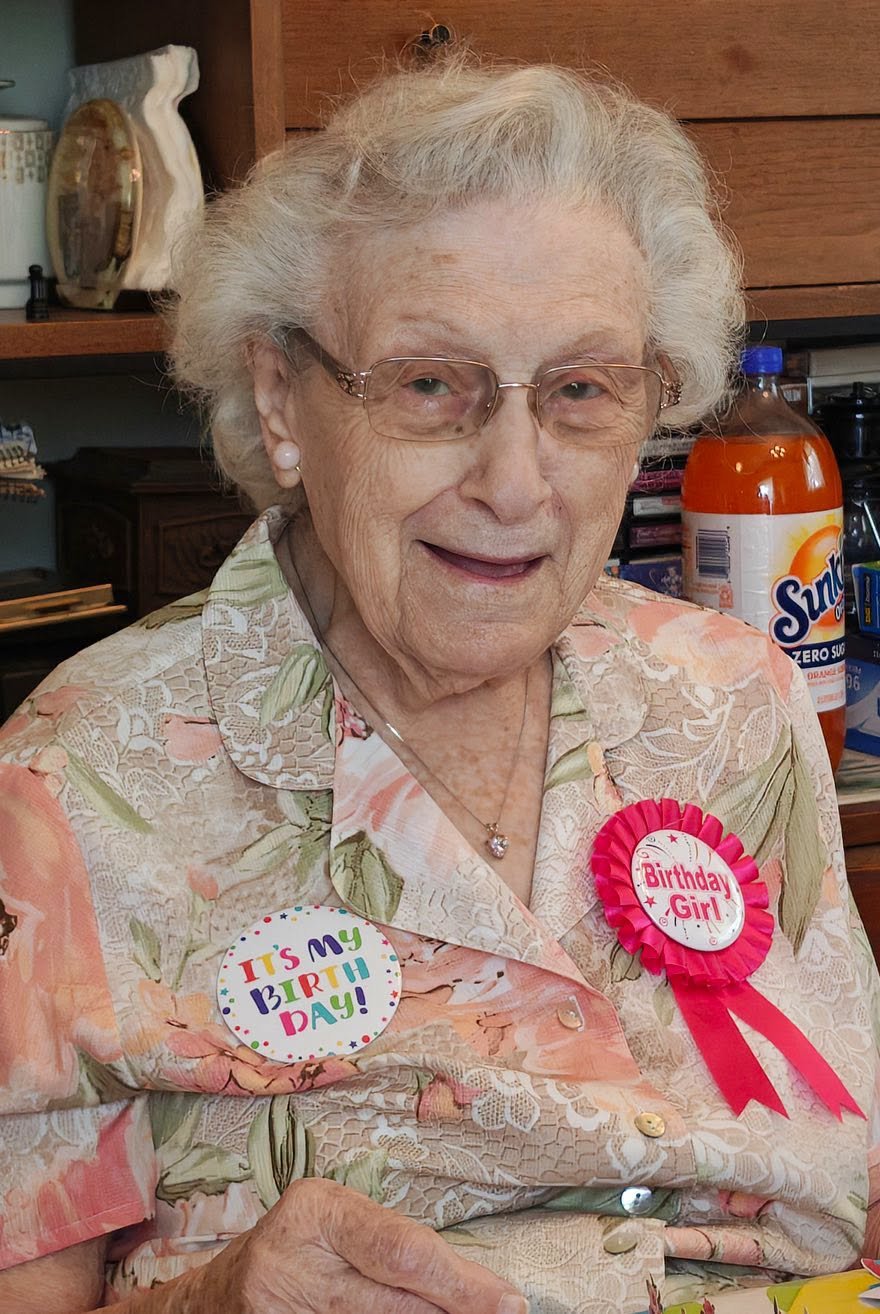
Sara Higginbotham doesn’t enjoy sitting still.
That much was obvious Monday morning at the Hokes Bluff Senior Center, where the 100-year-old was carefully packaging pre-portioned meals for other seniors.
A few minutes later, someone interrupted with news: Higginbotham had just won the center’s ongoing bingo game. Someone else had played the card she had selected while she was busy helping in the kitchen.
She laughed it off and went back to work while the other person picked out a prize for Higginbotham.
At an age when most people have long since stopped volunteering, driving or even living independently, Higginbotham still shows up to help. It’s what she has done for most of her life.
“I like coming here,” she said. “I like helping the seniors and spending time with my friends.”
Higginbotham turned 100 on June 21.
Her early life was defined by hard work, family responsibility and the lingering effects of the Great Depression.
Her father came to the United States from Italy in 1905 with no formal education and little English. Her mother had immigrated as a child and later worked in a silk mill after leaving school to help support her family.
Money was tight, but service was constant. Higginbotham remembers her mother regularly visiting sick neighbors and relatives — and often bringing a young Higginbotham along.
Those visits left a lasting imprint.
Higginbotham’s instinct to serve didn’t begin in Alabama. It began decades earlier, in Hackensack, New Jersey, where she was born in 1926 as Sara Pepe, the youngest of 10 children in an Italian immigrant family.
But she traces the beginning of her purpose even further back, to a book she read when she was young about a nurse.
When her sister once asked what she wanted to be, Higginbotham didn’t hesitate. The answer was clear to her — become a nurse. Even now, she connects that calling to something larger than herself.
“I believe I’m still here because God has a plan for everyone,” she said. “And I still have a job to do.”
As a teenager, she worked in a hospital after school for 25 cents an hour, delivering meal trays and cleaning dishes. It was her first glimpse into the profession she would eventually lead.
She went on to Alfred University in upstate New York, where she trained in nursing and rotated through hospitals in Olean, Philadelphia, Mount Morris and New York City.
After graduation, she returned to New Jersey and began working as a registered nurse at Hackensack Hospital.
It was there, in 1948, that she met Manning Higginbotham.
He was a patient visitor. She was a nurse. A bus stop conversation led to a phone call. A phone call led to a marriage in 1952.
The couple built a life that moved between states, careers and uncertainties.
They lived in New York, then New Jersey, and eventually made a major decision in 1966: a move to Alabama after Manning accepted a position with General Time in Gadsden.
To Higginbotham’s father, the move sounded almost unthinkable.
“The way he said it,” she recalled, “it sounded like I was moving to a different country.”
The family settled in Hokes Bluff on a small farm, which was a dramatic change from suburban New Jersey. There was no air conditioning. There were wells, livestock and long days adjusting to rural life.
“I had never been around cows up close before,” she said.
But the family adapted. Over time, they raised cattle, chickens, goats and gardens. Neighbors showed up with food. Friends helped with chores. And Higginbotham, true to form, kept working.
While Manning developed the farm, Higginbotham continued her nursing career at what was known then as the Baptist Hospital in Gadsden (now known as Gadsden Regional Medical Center), eventually moving into education and leadership roles, including director of nursing.
She later earned a master’s degree while working and raising children, something she credits to both determination and support from her husband.
Their children followed similar paths. Their daughter became a registered nurse. Their son went on to earn a business degree and later a master’s degree of his own.
As life went on and she and her husband began slowing down, Higginbotham heard of the happenings at the Hokes Bluff Community Center. She and Manning visited the center and Manning said they were too busy for it then.
Manning passed in 1996, and with suddenly more free time than she knew what to do with, Higginbotham started attending the center and quickly became a helping hand.
“It was clear that they needed some help then, so I said, ‘I can do it’ and I guess the rest is history,” she said.
That sense of purpose has kept her returning for 30 years.
Her favorite part of her Monday through Friday visits to the center is helping others and making friends.
“I just like being here,” she said. “I like helping people.”
Today, Higginbotham still drives herself, still volunteers and still insists she is not “old” in the way people assume.
She only recently got a cane after a bad fall in March resulted in a broken arm, though she does not use it.
“Canes are what old people use,” she said. “I want to still get around on my own as long as I am able.”
At the senior center, she is surrounded by people who know her as both friend and fixture. She is someone who packages meals, joins conversations and occasionally wins bingo without even noticing.
When asked what advice she would give her younger self, she said: “Don’t rush through things. Know that everything that looks bad will turn into what you need. Don’t give up and always know that God is there. He is your best friend.”
From a crowded New Jersey childhood to hospital wards, from raising a family on an Alabama farm to working in nursing leadership, and now to a senior center in Hokes Bluff, Higginbotham’s life has been defined by the same steady pattern: work, care and helping others.
“I never planned on being this age, you know,” Higginbotham said. “It just happened. I don’t think about being 100. I just wake up each day and try to make the best of everyday and look for opportunities to help people.”