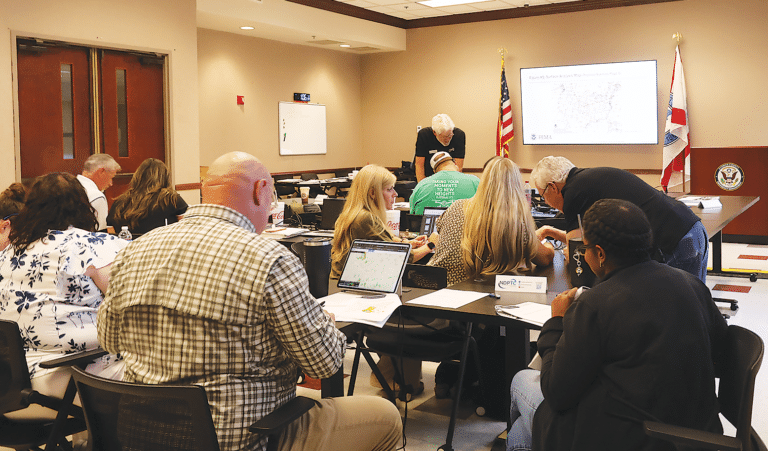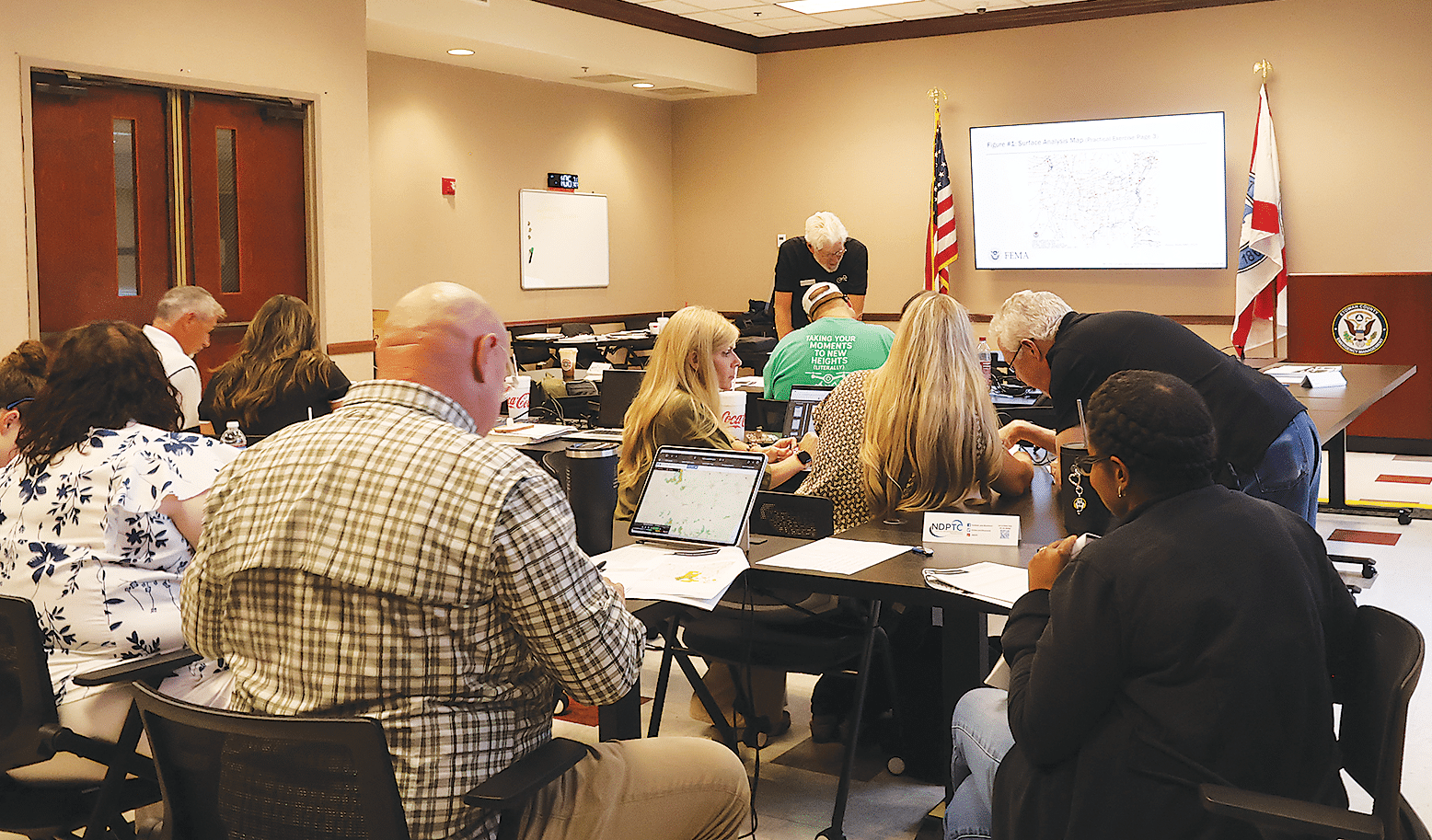
Emergency responders from across Etowah County spent Tuesday learning how to better predict, respond to and communicate tornado threats during an all-day preparedness course.
The course, funded by FEMA and taught by the National Disaster Preparedness Training Center at the University of Hawaiʻi, covered current tornado science, the identification of potential weather threats and the development of response plans for tornado emergencies.
For instructors Robert Goldhammer and James Purpura, the message was simple: preparation saves lives.
“Don’t be scared, be aware,” Goldhammer said.
Seated around tables with paper packets and weather maps, first responders analyzed radar imagery and forecast models from Tennessee’s December 2023 tornado outbreak, working together to predict where storms would develop and how they would move.
Living in Alabama means tornadoes are a familiar threat. According to the National Weather Service, Alabama recorded 73 tornado events in 2025, including more than 20 during March and May. So far this year, the state has experienced 44 tornado events.
While meteorologists can identify atmospheric conditions favorable for tornadoes, those conditions do not always produce one. Likewise, some tornadoes develop with little warning.
Purpura said tornadoes require four key ingredients: shear, lift, instability and moisture, known by the acronym SLIM. When those conditions come together, rotating thunderstorms capable of producing tornadoes can develop.
Much of Tuesday’s training focused on how weather information moves from national forecasters to local officials.
Once storms begin to develop, National Weather Service meteorologists monitor radar, satellite imagery and computer forecast models, comparing current conditions with past weather events to determine whether severe weather is likely.
Local forecasting offices, including the Birmingham office, which serves Etowah County, are responsible for issuing tornado warnings when a tornado has been confirmed by radar or trained weather spotters.
Despite advances in technology, Goldhammer said forecasting tornadoes remains an inexact science.
“Tornado science is an art,” he said.
Tornado safety recommendations have changed over time as meteorologists have learned more about storm behavior, according to Goldhammer. He said two persistent myths are that motorists should seek shelter beneath highway overpasses and homeowners should open their windows to equalize pressure.
Instead, he said people who cannot safely reach a sturdy building should remain in their vehicles with their seat belts fastened and duck below the window line, while homeowners should keep windows closed and seek shelter in an interior room on the lowest floor.
Continuing education helps first responders adapt as forecasting technology and tornado research continue to evolve, ensuring communities receive the most up-to-date guidance before severe weather strikes, Goldhammer said.
The instructors encouraged residents to have multiple ways to receive weather warnings, identify a safe shelter before storms arrive and keep an emergency kit stocked with essentials.