Taneshia Timmons (far right) with her mother, Eva Timmons, and daughters Sha’maine, 16, and Le’andria, 5, at Sha’maine’s “Sweet 16” birthday party. Photo submitted by Timmons.
Editor’s note: This is an expanded version of a story published in last week’s print edition
Update: On Thursday, April 2, Taneshia called the Messenger to say she received a kidney transplant.
By Lindsey Frazier, Features Editor
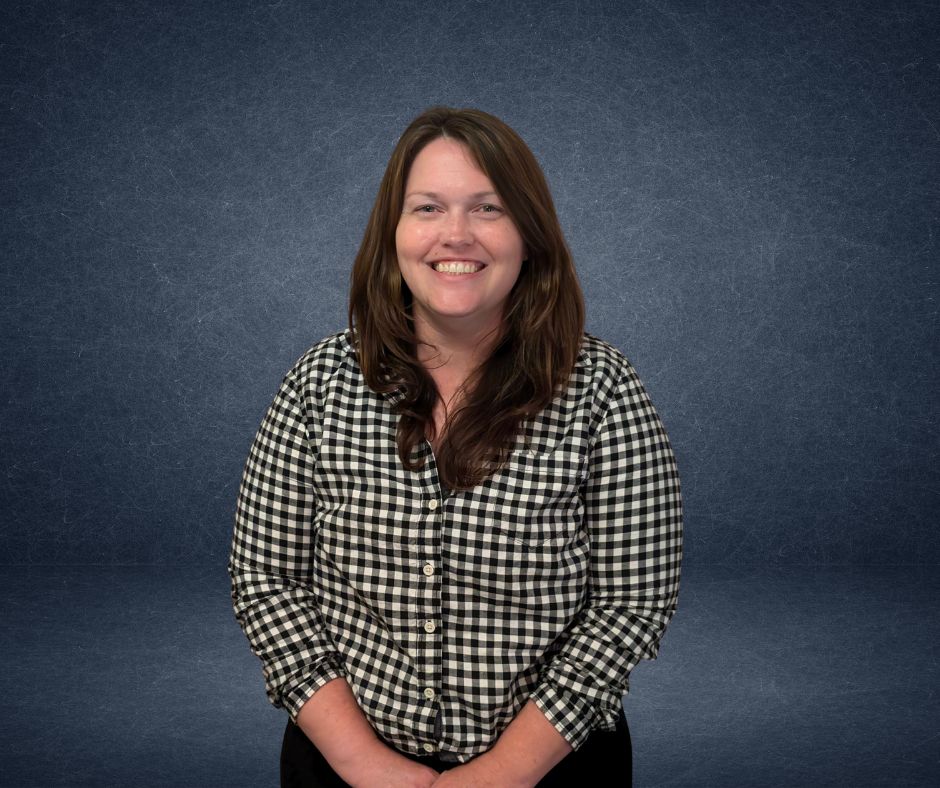
Taneshia Timmons sat across from me in a chair at the Gadsden Public Library, tears streaming down her face, as she told me about the challenges she has faced since 2019.
For the last six years, Timmons has been living with Stage 4 kidney failure. Though she appears to be fine, over the next hour and a half, she explained to me the hardships of this diagnosis.
“I hear it all the time, ‘Oh, you look great,’ and they know I’m sick,” Timmons said. “They’re probably thinking, ‘Is she really that sick?’”
Years before her diagnosis, Timmons said she saw a nephrologist who told her she would be okay and prescribed blood pressure medication. She said she later looked at a report that mentioned a stage of kidney disease, but the doctor never discussed it with her, and she trusted his judgment.
“I feel like if he would have said, ‘This is what’s going to happen if you don’t do this,’ then I could have changed my life and this never would have happened,” she said.
The first sign came in 2019, a few months after her father passed away, when she noticed her legs and feet beginning to swell. The buildup of fluid became so severe that her skin began to leak — a condition sometimes referred to as “weeping,” she said.
Then her eyes began to bleed, a complication caused by high blood pressure and high blood sugar, her doctors told her. She later had surgery on both eyes.
“Pay attention to your body,” Timmons said. “Look at your blood work. Listen to the doctors, but you also have to listen to your body.”
During her recovery from eye surgery, Timmons found out she was pregnant with her second daughter. Although doctors warned about the complications pregnancy could add to kidney failure, Timmons said she struggled with the decision.
“I went to dialysis and I was telling people what they said,” Timmons said. “A nurse sat down with me and said, ‘Hey, I had a sister who was really sick, and she was still able to have her baby.’ That gave me the sign I think I needed to continue on that journey.”
Throughout her pregnancy, Timmons said she visited her doctor at the University of Alabama at Birmingham every two weeks to monitor both her health and the baby’s. Around the same time, she began peritoneal dialysis, a procedure in which a port is placed in the abdomen, allowing patients to perform dialysis at home.
Her pregnancy prevented her from being placed on a kidney transplant list, she said. After her daughter was born, her main goal became getting on one.
There are rigorous qualifications to be added to a transplant list, and every time she has a procedure, even a transfusion, she could be removed from the list, Eva Timmons, Taneshia’s mom, said. Timmons said she needs a double knee replacement, and epidural for her neck and a hysterectomy, but she worries about going inactive on the list.
“They have to make sure everything is in line to be able to do a transplant,” Timmons said. “They have to make sure that if you get a transplant, it will be successful… You have a lot of hoops to jump through and a lot of difficult decisions to make.”
She said she was initially turned down by UAB — the main hospital in Alabama for kidney transplants, performing more than 300 a year according to its website — because of her weight at the time.
Her other options were Piedmont in Atlanta and Erlanger in Chattanooga. Although both were far from home, Timmons said she wanted the best odds possible for receiving a transplant.
Health requirements are not the only challenge for people applying for transplant lists.
Timmons said she was told she needed about $5,000 in savings before surgery to ensure she could cover expenses during recovery. Because of her condition, she lost her job and, along with it, her insurance. That loss created additional complications when applying for transplant lists.
The insurance plan she was able to purchase out of pocket was not accepted by Piedmont, she said, which resulted in her being dropped from its transplant list. At one point, she said, her general practitioner warned she might have to find another provider if she did not change insurance plans.
“I did decide to come off the insurance that was giving me so many problems and just go back to paying (out of pocket),” Timmons said. “Paying for things when you’re not working and, you know, I’m on dialysis, it was really tough.”
The American Kidney Fund helped with some of the financial burden, but it did not cover everything, Eva Timmons, said.
“You cannot be medium income or average income or you won’t get any help,” Eva Timmons said. “I just don’t understand that part of it. They have medical insurance and this and that, but when it comes down to the little bitty things — like getting somebody to drive you to Atlanta — you might need a babysitter to come in and help, but you don’t qualify for anything.”
Eva Timmons said her daughter often does things she is not supposed to do, like lifting heavy items or performing dialysis at home by herself. But without additional help, the family does what it can.
“Mentally, this is stressful for everybody,” she said. “We are just at each other.”
“We are both Leos,”Taneshia Timmons added with a slight laugh. “But regardless, if something happens or I need something, she’s going to be there.”
Things were relatively quiet for a while after her daughter was born, she said. She remained on transplant lists but had not yet received a match.
In 2024, when she attempted again to be placed on UAB’s transplant list, doctors referred her to a cardiologist, for what she thought was a discussion about the future.
“We went to the doctor, me and my mom, and he started showing us pictures,” Timmons said. “He said, ‘This is what’s going on. Your right mitral valve has a lot of calcium on it and it’s leaking.’”
She said doctors gave her two days to get her affairs in order in case complications arose during surgery, but it needed to be done as soon as possible.
“I probably cried the whole way home,” Timmons said before apologizing for the tears she could not hold back.
There are several complications that can arise during kidney failure, especially involving the heart, according to the National Kidney Foundation. Although the link between kidney disease and heart disease is not fully understood, the two conditions can directly affect each other.
Anemia, high blood pressure, high potassium levels and mineral and bone disorders are among the most serious complications that can develop during kidney failure, according to the foundation. Excess calcium in Timmons’ blood made her blood vessels less flexible, contributing to the leak in her heart valve.
“It was a very emotional time,” Timmons said. “If I cried most about anything, it would be this.”
After her first surgery, her heart was still not functioning properly. She was undergoing dialysis and using an oxygen tank when doctors realized the procedure had not been successful. She underwent a second heart surgery in 2025.

During that period, Timmons decided to join the sorority Sigma Gamma Rho as a support system.
“Those ladies were amazing,” Timmons said through tears. “They uplifted me in every way. They helped me during every process. They made sure I was good the whole time. I actually felt loved, even though these were strangers.”
Timmons said she walked out of the hospital after her second heart surgery without needing oxygen.
“People say, ‘I don’t know how you do it,’” she said. “It’s because I have to. I don’t have a choice. I have to keep going for me and my daughters.”
Currently, Timmons is now on two transplant lists and performs dialysis at home for three hours a day, four days a week. She said she has since found a doctor who listens to her and speaks candidly about her condition.
The waitlist for a deceased donor kidney can is anywhere from three to five years, but it may be longer in some parts of the county, according to the National Kidney Foundation.
Another way to get a transplant is to have a living donor. In 2021, more than 780,000 patients are living with kidney failure, with less than 25,000 receiving a transplant that year, according to NKF. A third deceased donor kidneys are discarded due to logistics and communication, the foundation’s website said.
A living donor, either directly given to a patient or received through a paired donor exchange, which means one living donor swaps with another for patients who are willing, but incompatible, decreases wait time and have less odds of rejection, according to the Health Resources and Services Administration.
The National Living Donor Assistance Center help pay for travel expenses, lost wages and dependent care, paying up to $6,000 of certain expenses for them and their caregiver.
“When you get sick and think you’re going to die, it gives you a whole other perspective,” Timmons said. “Now you have to fight to live. I’m going to fight for my daughters… I’m going to keep pushing until I can’t push any more, and then I’ll crawl. I’ll even slither life a snake before I don’t try.”
March is National Kidney Awareness Month. According to the National Institutes of Health, the observance aims to raise awareness about kidney disease, which affects more than 35 million adults in the United States.
Kidney disease is often referred to as a “silent disease” because it has few early symptoms. It can lead to kidney failure, heart disease or stroke. Health organizations use the month of March to promote early detection, healthy lifestyles and managing risk factors such as high blood pressure and diabetes.
For more information about being a living donor, visit https://www.hrsa.gov/optn?from=optn.transplant.hrsa.gov or https://www.uabmedicine.org/specialties/living-donor-program/
For information about financial assistance for living donors, visit https://www.livingdonorassistance.org/