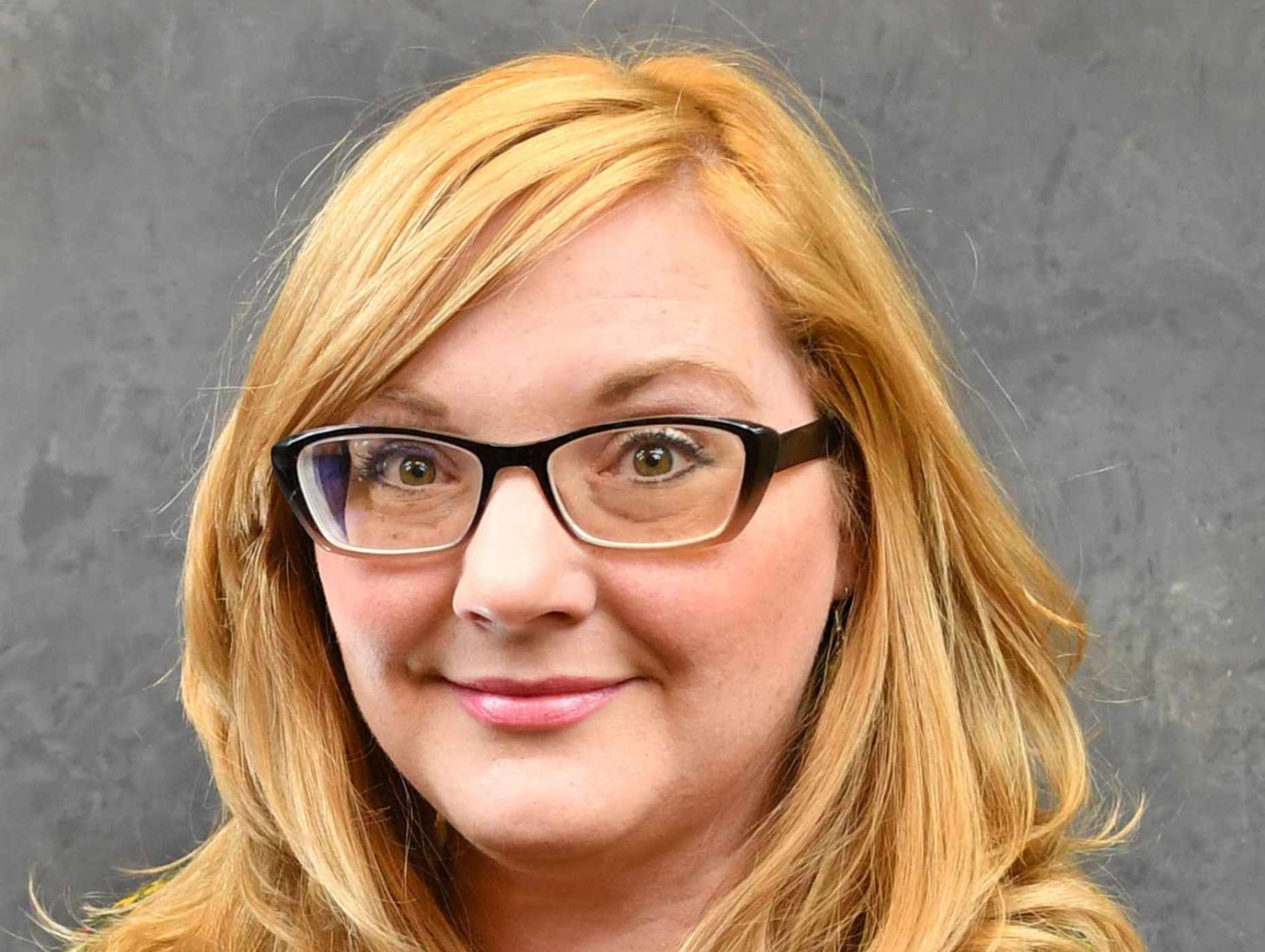
By Tabitha Bozeman
This week, I have turned the heaters on and off in the house. We’ve piled on layers of sweater and jackets, and stripped right back down to short sleeves the next day. It is January in Alabama, the time when we live in the space between seasons, not knowing from one week to the next what to expect, and the unknown plays a big role in getting ready for work and school each day. Spring semester is off to a great start, and with it, a new literature class. Literature often forces us to sit with the discomfort of contradiction and the unknown.
This matters for all of us in today’s noisy, polarized, scary world.
This week, I was getting ready for literary analysis class that acknowledges complexity and how more than one thing can be true at the same time. This can be a very uncomfortable truth to acknowledge. It is so much easier to believe there is only one right answer on a test question, or that there is only one correct way to view a situation.
Tolerating the discomfort of not knowing what to think without rushing to a conclusion is a skill, not a failure.
Gilda Radner said “Life is about not knowing, having to change, taking the moment and making the best of it, without knowing what’s going to happen next. Delicious Ambiguity.” As I read with my girls, on my own, and even with students, this is something we discuss frequently. Reading isn’t about having all of the answers, but about paying attention to the details. It is about weighing all of the possibilities, braiding together the ones that fit, and coming up with new ideas and approaches to age-old questions and human experiences.
Reading teaches us how to listen without interrupting. It trains our minds to consider empathy instead of immediately demanding agreement. Reading allows us to experience complexity without chaos. Reading doesn’t always hand us nice, neat answers, but it does provide space to sit with our questions. Without questions, there would be no learning. Jiddu Krishnamurti described it like this: “There is no end to education. It is not that you read a book, pass an examination, and finish with education. The whole of life, from the moment you are born to the moment you die, is a process of learning.” If we cannot tolerate the uncertainty of the unknown, we cannot learn. If we cannot learn, we cannot fix what needs to be fixed.
Today, I intentionally make more time for reading than I have in the past. I used to have the luxury of time. I could just wait until I had nothing else to do, then I’d pick up a book. Life is so busy these days that I have to make time to read. If I don’t it will fall by the wayside, usurped by chores and work and mindless scrolling. And, I cannot survive mentally and emotionally in the world around me right now without giving myself at least as much positive reading as negative–and the negative sneaks up in videos, emails, reels, tiktoks, memes, headlines, blurbs.
The everyday experiences of so many around us right now are heavy and scary and unpredictable. There are those who believe they have all the answers and the right to strip others’ rights. There are those who believe they cannot reason their own beliefs and ideas, and so they take up those of the loudest around them. There are those who are terrified to rock the boat for fear of retribution, so they are quiet in their uncertainty. But, we don’t need to be scared of uncertainty. Uncertainty spurs us to ask questions, and questions are how we learn and grow. Reading helps us consider questions and ideas and experiences that may be new and unfamiliar. It allows us to experience empathy for situations unlike our own. These are the skills necessary for a better world–not having all the answers. Richard P. Feynman says it this way: “I can live with doubt and uncertainty and not knowing. I think it is much more interesting to live not knowing than to have answers that might be wrong. If we will only allow that, as we progress, we remain unsure, we will leave opportunities for alternatives. We will not become enthusiastic for the fact, the knowledge, the absolute truth of the day, but remain always uncertain … In order to make progress, one must leave the door to the unknown ajar.”