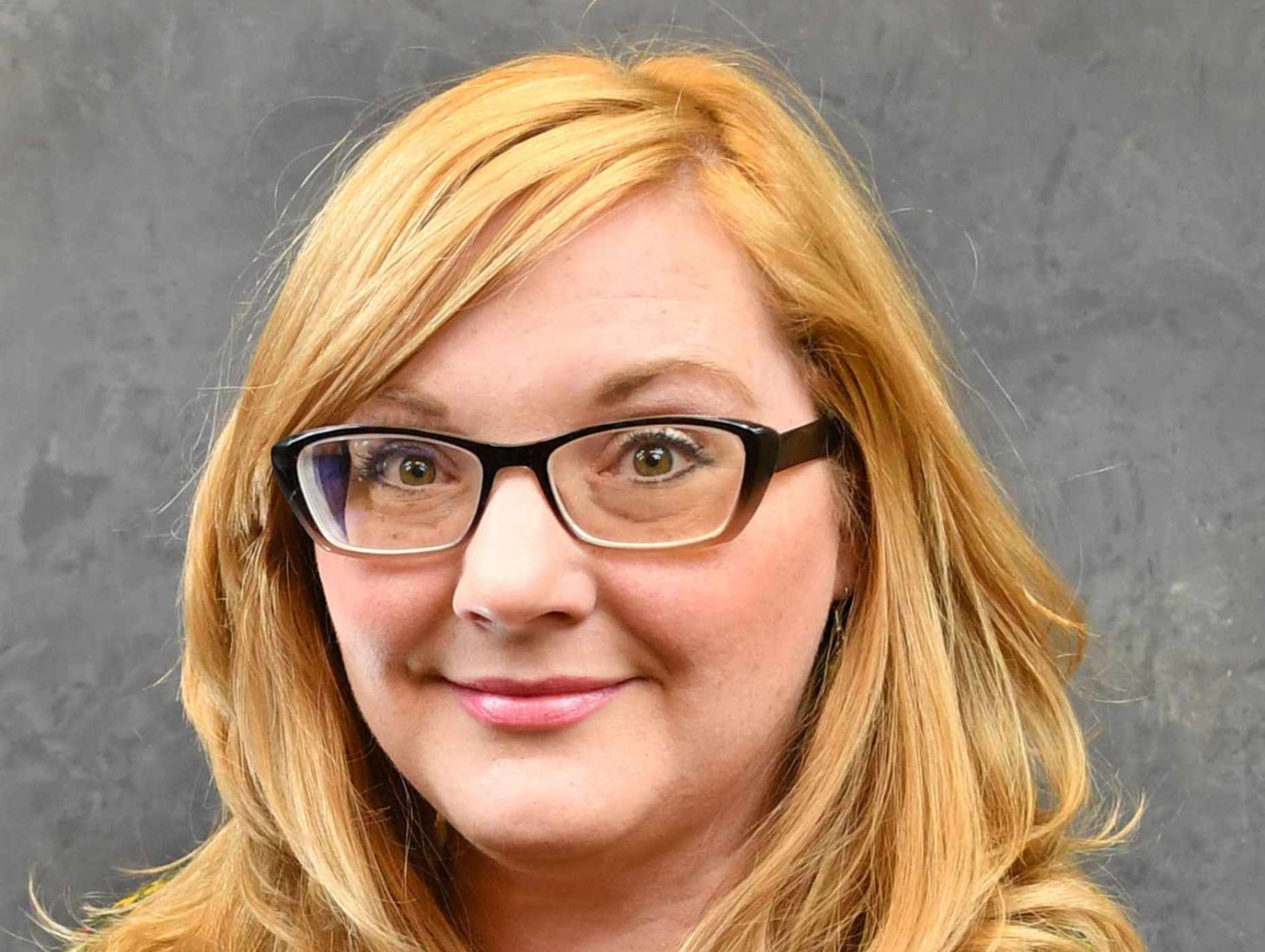
By Tabitha Bozeman
On my way to work Tuesday morning, I drove much more slowly than usual, as did everyone around me. We were scared of hitting black ice. I noticed right away, though, that from the end of my driveway, to the end of my street, then onto the main thoroughfares, there was well-travelled sand everywhere on the roads. As I came down the mountain, there were a few places where water had puddled up, frozen, then been driven over, dragging water and ice out into the road. The sunrise glared on the water and ice, beautiful and blinding. I looked again and noticed that there was sand piled up in and all around the puddle. Cars were driving through it just fine. Even in the cold, rainy weather, our city workers got out and took care of things before there was a safety hazard. In fact, I noticed them preparing for the cold weather long before it got here: burst pipes were fixed, drains unclogged, sand was loaded and ready. We had reports about what to expect from the city, what the progress was on various projects, where to find warming stations, and schools were delayed or closed to keep everyone safe.
While we were bundled into our home waiting out the cold weather, the girls and I did a lot of reading because the best place to be when it is 16 degrees outside is under a blanket with a good book. Right now, I have a couple of books going, but I focused most on one called The Librarian of Saint- Malo. In it, a young woman who is the local librarian in France during the Nazi invasion navigates love, loss and complicated moral and philosophical questions. There is a nosy old neighbor who is full of hatred and spite, a German soldier who is complex and evolving, and a young boy who helps with the Resistance. Through it all this young woman is trying to live within the constantly changing guidelines and rules of the invaders, mourn her losses and hold onto her humanity. After an interaction with a stranger who is forced to leave her young children and flee, she muses that “Something deeper than friendship united us: Neither of us had lost our humanity. Many people think human beings are what is wrong with the world, but the real problem is dehumanization.”
This quote has stayed with me as I’ve borne witness these weeks to murders and outrage, grief and protest, a great coming together and attempts to divide. What we have seen is the furthest thing from “do good to everyone” (Galatians 6:10), “Do not oppress the widow, the fatherless, the sojourner, or the poor, and let none of you devise evil against another in your heart” (Zechariah 7:10), or “For the entire law is fulfilled in keeping this one command: “Love your neighbor as yourself” (Galatians 5:14).
However, although this week has been cold, and it has been heavy, there has been beauty in it, too: watching others lend helping hands when a family pet is lost; seeing strangers and acquaintances meet up and encourage one another to keep on keeping on; witnessing empathy and outrage overcome fear; hugging a friend on a clear, cold night while the moon is bright overhead; listening to a favorite album by candlelight and reading a good book.
My current read has reminded me that no two people have identical views and ideas about every current issue or debate. No two people are going to agree on every philosophical, theological or political topic. No two people have the same experiences to shape their worldviews. But every single human is worthy of having their humanity recognized. Every single human deserves more than being treated as The Other.
Isabel Wilkerson points out how to avoid this: “It is harder to dehumanize a single individual that you have gotten the chance to know.” When we see someone at work or school, in our neighborhood or grocery store, when we have exchanged pleasantries, smiles and handshakes, we see them in their humanity. The coworker who always asks about your kids, the associate who smiles and asks how your day is when you grab takeout, the public servant who goes out of their way to be supportive of local events? Those are humans. “Which is why” Wilkerson goes on to say, “people and groups who seek power and division do not bother with dehumanizing an individual. Better to attach a stigma, a taint of pollution to an entire group.”
This week, I saw many people abdicate their own humanity by denying that of others. But, I saw many, many more humans come together to protect, support, and lift up those who were having their humanity denied. Those moments help us keep a hold of faith in humanity when we need it most.
Gandhi reminds us that “You must not lose faith in humanity. Humanity is like an ocean; if a few drops of the ocean are dirty, the ocean does not become dirty.” When the most horrific examples of human behavior are streamed 24/7 on tv and social media, it is easy to lose faith. But, all day, every day, humans are out there, helping one another. Carrying groceries for someone else, holding a baby for a tired parent, making sure the roads are ice-free in frigid, wet weather. Because, at our very core, I believe most of us don’t want to live in a world where it is ok to strip someone of their humanity. Like Anne Frank said, “In spite of everything, I still believe that people are really good at heart.”