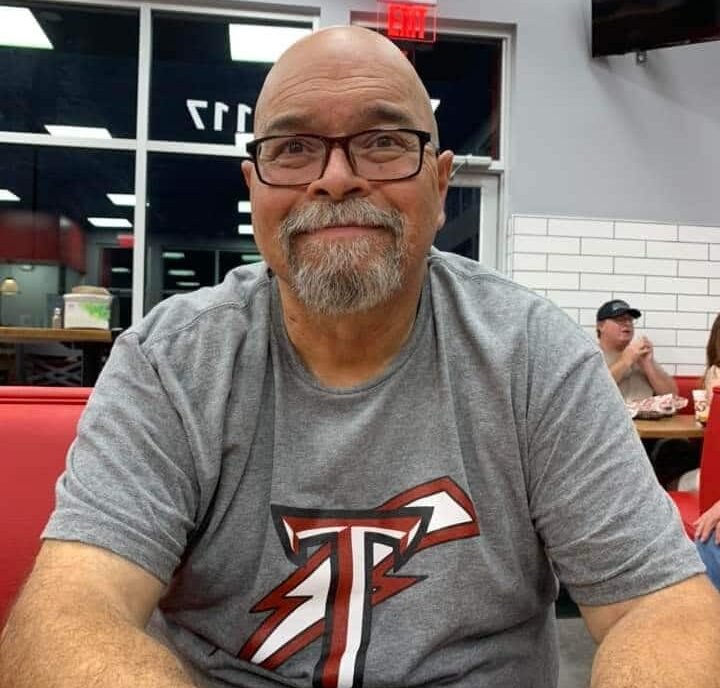
Update: On Wednesday, April 1, Charles told the Messenger he received a kidney transplant.
By Lindsey Frazier, Features Editor
On Thursday, Charles Beshears Jr. spent most of his day at the University of Alabama at Birmingham hospital to undergo testing that he might have to repeat next week when he visits Erlanger hospital in Chattanooga — a process he has to complete once a year to remain on the transplant list at both hospitals.
A CT scan, chest X-ray, EKG, stress test and Doppler ultrasound are all completed at UAB. Erlanger can use most of those results for its own records, but Beshears said UAB is more particular.
“They are good, and they are thorough,” Beshears said. “But there are little things that are different.”
For Beshears, the trips are just one part of a routine that he has become accustomed to since 2022.
Beshears had lived with low kidney function for several years, but it had remained stable — until he contracted COVID for the second time and was hospitalized. Within days, Dr. Wan Kwan, a nephrologist at Gadsden Regional Medical Center, told him his condition had worsened.
“About 1 in the morning, Dr. Kwan came into my room and said, ‘Your kidneys have failed completely,’” Beshears said. “He said, ‘In the morning we’re going to put a port in your chest and start dialysis.’”
A central venous catheter, or chest port, is used for short-term, emergency situations when time does not allow for an arteriovenous fistula, which is typically placed in the forearm or upper arm, according to the Metropolitan Vascular Institute.
It wasn’t until the surgeon arrived the next morning that the shock began to wear off and reality set in. The procedure took place in his hospital room. A tent was built around his bed, and an air pump was used to sterilize the air inside. An hour later, he was headed to his first dialysis treatment.
“I didn’t know what was going on or what they were doing,” Beshears said. “All I saw were tubes with blood coming out and blood going in. It was cleaning my blood because my kidneys couldn’t do it anymore.”
Since then, dialysis has become a constant.
More than one in seven adults are estimated to have chronic kidney disease. For people who have diabetes or high blood-pressure, the leading causes for kidney failure, it’s one in three, according to the National Institute of Diabetes and Digestive and Kidney Diseases.
As many as nine in 10 aren’t aware they have CKD because the early stages have no symptoms, according to the institute.
Beshears now travels to Attalla three days a week — Monday, Wednesday and Friday—for treatments that last more than four hours. Each session is vital for his health.
When he first began dialysis, his appointment was at 10 a.m., which he said was terrible because it made it difficult to do much before or after. Over time, he moved into the earliest available slot at 4:30 a.m.
“Not many get well, and a few have gotten a transplant, but not many that I know of,” Beshears said. “It’s kind of scary, too, because that means a lot of people aren’t there anymore.”
Over the years, he has gotten to know many of the people who sit alongside him during treatment. For nearly five hours, three days a week, they share the same space — and it’s noticeable when someone doesn’t return.
Each time, he tells himself not to ask where they are.
“You miss them, you know, when they sit next to you or close to you. I kid around with the techs because they work hard, and they get upset when people pass away,” Beshears said. He paused for a long moment to contain his emotions. “I can see where, if you’re not kind of strong, you give up — but I can’t do that.”
While dialysis sustains him, a transplant remains his best chance at a longer, more stable life.
About two years ago, a niece-in-law was tested to see if she was a match — and she was a perfect match. However, the testing process takes time, and during that period she began taking an over-the-counter supplement for hair and nails, he said. When she returned for additional scans, doctors found kidney stones caused by the supplements, making her ineligible to donate.
“It was tough. I held it all on the inside,” Beshears said. “I was very upset, but I try not to show it to my wife, kids and grandkids. I’m pretty good at bottling things up.”
What hurts him the most, he said, is when people look him in the eye and say they will get tested but never follow through.
“I’m not going to ask them,” Beshears said. “I’m never going to say, ‘Hey, did you go get tested?’ I’m just not built that way.”
For now, Beshears continues his routine — dialysis three days a week, annual evaluations and the long wait for a transplant.
March is National Kidney Awareness Month. According to the National Institutes of Health, the observance aims to raise awareness about kidney disease, which affects more than 35 million adults in the United States.
Kidney disease is often referred to as a “silent disease” because it has few early symptoms. It can lead to kidney failure, heart disease or stroke. Health organizations use the month of March to promote early detection, healthy lifestyles and managing risk factors such as high blood pressure and diabetes.
For more information about being a living donor, visit https://www.hrsa.gov/optn?from=optn.transplant.hrsa.gov or https://www.uabmedicine.org/specialties/living-donor-program/
For information about financial assistance for living donors, visit https://www.livingdonorassistance.org/